Understanding the Limits of AI in Disaster Scenarios
Artificial intelligence has become an indispensable asset for modern businesses, automating processes, predicting risks, and streamlining decision-making. However, when disaster strikes—whether through cyberattacks, natural catastrophes, or system failures—AI reveals critical limitations that organizations must acknowledge. While AI excels at pattern recognition and rapid data processing, it operates within the constraints of its programming and training data. This means that truly unprecedented events or complex, multifaceted crises may confound even the most advanced algorithms.
One fundamental limit lies in AI’s reliance on historical data. Disasters often present novel scenarios that fall outside of established patterns, leaving AI systems unable to generate accurate predictions or effective responses. For example, an AI trained on previous network breaches may not recognize the unique signatures of a new, sophisticated attack. Additionally, AI lacks the human intuition and contextual awareness needed to assess nuanced situations—qualities that become invaluable when split-second, high-stakes decisions are required.
Key Limitations of AI During Disasters
- Data Dependency: AI decisions are only as good as the data provided. Gaps or inaccuracies in data during crises can lead to faulty outcomes.
- Lack of Flexibility: AI cannot improvise or adapt to radically new scenarios without prior programming or retraining.
- Absence of Empathy and Judgment: In situations involving human welfare, AI cannot replicate the empathy or ethical judgment of experienced leaders.
Recognizing these limitations is essential for businesses aiming to build robust disaster recovery strategies that combine AI-driven speed with irreplaceable human oversight and adaptability.
The Critical Difference Between Detection and Recovery
When disaster strikes your business systems, the distinction between detection and recovery becomes a defining factor in how well your organization weathers the storm. Artificial intelligence, with its remarkable ability to monitor networks and flag anomalies, excels at detecting unusual patterns—be it a sudden spike in data access or a potential security breach. However, detection is merely the first line of defense. Recognizing that something has gone wrong is not the same as restoring normal operations.
AI-powered systems can rapidly alert IT teams to emerging threats, leveraging machine learning to distinguish real dangers from false alarms. This swift identification is invaluable, often shaving critical minutes off the time to response. Yet, recovery—the process of restoring data, reestablishing connections, and ensuring business continuity—remains a fundamentally human and procedural challenge. No matter how advanced the detection algorithms, AI cannot independently rebuild corrupted databases, navigate the nuanced decision-making required during a crisis, or coordinate the complex logistics of a full-scale system restoration.
Detection vs. Recovery: Why the Distinction Matters
- Detection: Focuses on identifying issues as soon as they arise, leveraging AI’s speed and efficiency.
- Recovery: Involves hands-on intervention, robust backup strategies, and careful orchestration—areas where human expertise is irreplaceable.
Understanding this critical difference ensures organizations invest not only in powerful AI detection tools but also in comprehensive recovery plans, bridging the gap between awareness and action when every second counts.
Why Recovery Planning Matters More Than Advanced Alerts
Amid the relentless evolution of artificial intelligence, it’s tempting to believe that advanced alerts and real-time monitoring systems can shield your business from every disaster. While these technologies are invaluable for identifying threats and anomalies as they unfold, they are not a substitute for comprehensive recovery planning. The reality is stark: even the most sophisticated AI cannot prevent every outage, cyberattack, or catastrophic failure. When disaster strikes—whether due to human error, hardware malfunction, or unforeseen external events—having a strategic recovery plan is what determines whether your business stumbles or survives.
Advanced alerts excel at detection, but detection alone is reactive by nature. These systems notify you after an incident has occurred or is in progress. They do not restore lost data, repair corrupted systems, or communicate steps to your staff and customers. That’s where recovery planning steps in, providing a proactive foundation for resilience rather than mere response. A robust recovery plan encompasses:
- Clear protocols for data backup and restoration, ensuring critical information isn’t lost forever.
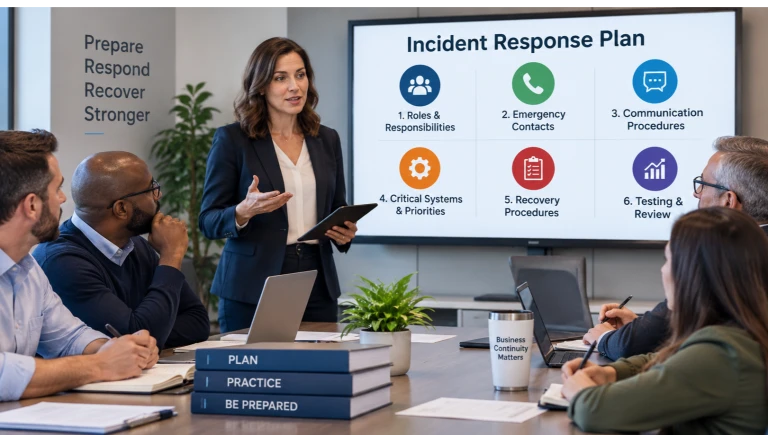
- Defined roles and responsibilities, so every team member knows exactly what to do in a crisis.
- Communication strategies to manage internal coordination and external stakeholder expectations.
- Regularly tested procedures to adapt to evolving threats and technology changes.
Ultimately, while AI-driven alerts are a vital layer in your defense, true business continuity hinges on recovery planning. By prioritizing a well-crafted recovery strategy, you build resilience that technology alone cannot guarantee—preparing your business not just to react, but to recover and thrive when the unexpected occurs.
Building a Tested Safety Net for Business Continuity
When disaster strikes your business systems, relying solely on artificial intelligence for recovery is a risky gamble. While AI-driven tools can support detection and response, the cornerstone of true resilience lies in building a robust, thoroughly tested safety net that ensures business continuity. This safety net goes far beyond software—it’s the collective sum of proactive planning, rigorous testing, and a deep understanding of your organization’s unique vulnerabilities.
The Foundation: Proactive Planning
Establishing a resilient safety net begins with comprehensive business continuity planning. This involves mapping out every critical system and data flow, identifying potential failure points, and designing contingency measures tailored to your operations. The process should engage stakeholders from every department, ensuring that the plan addresses technical, operational, and human factors. By integrating disaster recovery strategies and backup protocols, you lay the groundwork for minimizing downtime and data loss when the unexpected occurs.
The Importance of Rigorous Testing
A plan is only as effective as its execution. Regularly scheduled drills and scenario-based testing are essential for uncovering hidden weaknesses and familiarizing teams with their roles during a crisis. Testing should simulate real-world disruptions—from cyberattacks to natural disasters—validating that systems, backups, and communication channels function as intended under pressure. These exercises not only build confidence but also foster a culture of preparedness.
By investing in a tested safety net, businesses can weather disruptions with agility and assurance, ensuring that operations can resume swiftly no matter what challenges arise.
The Role of Documented Playbooks in Fast Recovery
When disaster strikes your business systems, every second counts. Having a meticulously documented playbook becomes the blueprint for swift recovery, transforming chaos into coordinated action. Unlike artificial intelligence, which excels at processing data and automating routine responses, a playbook brings human insight, strategic foresight, and organizational memory to the forefront. It serves as a comprehensive manual, outlining step-by-step procedures, communication protocols, and escalation paths tailored to your unique business environment.
A robust playbook does more than simply list technical fixes; it anticipates real-world scenarios and integrates lessons learned from past incidents. This dynamic resource enables teams to respond decisively to unexpected challenges, minimizing downtime and mitigating losses. It assigns clear roles and responsibilities, ensuring that every team member knows their part in the recovery process. Moreover, it incorporates contact lists, vendor details, and backup strategies—elements that AI alone may overlook in the heat of a crisis.
Key Components of an Effective Playbook
- Incident Identification: Clear criteria to recognize and classify the disaster.
- Response Procedures: Detailed steps for containment, eradication, and recovery.
- Communication Plans: Predefined messaging for stakeholders and clients.
- Resource Inventory: Up-to-date lists of tools, contacts, and backup resources.
In essence, documented playbooks empower organizations to act with precision and confidence—qualities that even the most advanced AI cannot replicate during high-stakes recovery efforts.