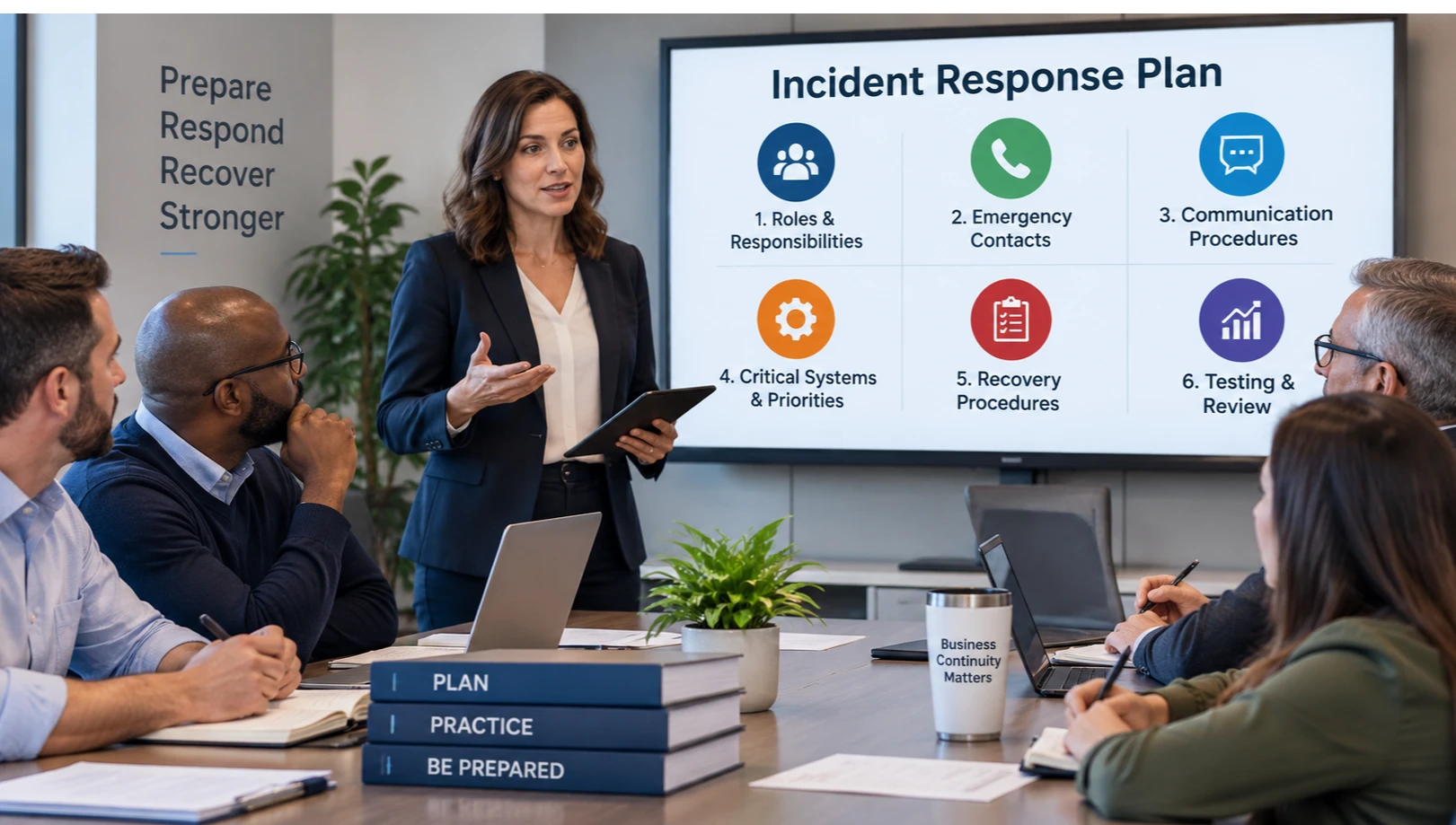
6 Essentials Every Incident Response Plan Must Include for Business Continuity
In today’s hyper-connected business landscape, the question is no longer if a security incident will occur, but when. Cyber threats loom large over organizations of all sizes, making a robust incident response plan not just a regulatory checkbox, but a lifeline for business continuity. Without a well-structured strategy, even a minor breach can spiral into a catastrophe, eroding customer trust, damaging reputations, and inflicting financial devastation. To ensure your organization can withstand, respond to, and ultimately recover from security incidents, your incident response plan must be built on six foundational essentials.
1. Clear Roles and Responsibilities
The first cornerstone of any effective incident response plan is the unambiguous assignment of roles and responsibilities. When a crisis unfolds, confusion is your greatest enemy. Every second counts, and any ambiguity can result in costly delays or missteps. A well-defined incident response team transforms chaos into coordinated action.
- Incident Response Team Formation: Identify key personnel across IT, legal, communications, and executive leadership. Assign clear titles such as Incident Commander, Communications Lead, Forensic Analyst, and Liaison Officer. Each role should have a detailed list of duties and decision-making authority.
- Alternate Contacts: Backups for each key position ensure continuity if primary contacts are unavailable. Maintain up-to-date contact information in both digital and hardcopy formats.
- Engagement Protocols: Outline when and how to involve external parties such as law enforcement, cyber insurance providers, public relations firms, or third-party incident response specialists.
This clarity ensures that, under pressure, your team acts as a synchronized unit rather than a crowd of individuals, streamlining escalation paths and empowering decisive action.
2. Incident Detection and Reporting Mechanisms
Swift detection is the difference between containing a minor security event and suffering a full-scale breach. The best incident response plans embed proactive detection and reporting mechanisms, combining technology and human vigilance.
- Automated Monitoring: Deploy advanced security information and event management (SIEM) tools, intrusion detection systems (IDS), and endpoint monitoring solutions to continuously scan for suspicious activity.
- Clear Reporting Channels: Employees must know exactly how and where to report anomalies. This could be a dedicated email, hotline, or incident management portal. The process should be simple, accessible, and encourage prompt disclosure.
- Training and Awareness: Regularly educate staff on the signs of phishing, malware, and social engineering attacks. Empower them to act as an extension of your detection systems.
- Incident Classification: Define what constitutes an incident, categorize severity levels, and establish criteria for escalation. This ensures that the right incidents receive the right attention, fast.
By weaving together technology and human insight, you create a detection net that reduces dwell time and limits the impact of emerging threats.
3. Comprehensive Communication Strategy
Effective communication is the backbone of any crisis response. In the fog of a security incident, misinformation can spread rapidly, both inside and outside the organization, compounding the damage. Your incident response plan must outline a robust communication framework to maintain trust and transparency.
- Internal Communication Protocols: Specify how information will flow between the incident response team, management, and staff. Use secure channels to prevent leaks or unauthorized disclosures.
- External Communication Plans: Prepare templates and procedures for notifying customers, partners, regulators, and the media. Timely, honest communication can mitigate reputational fallout and fulfill legal obligations.
- Pre-drafted Statements: Develop draft press releases and customer notifications in advance. This allows rapid deployment when time is of the essence.
- Spokesperson Identification: Assign a trained spokesperson responsible for all public communications. Consistency in messaging is key to maintaining credibility.
A coordinated communication effort not only helps manage the narrative but can also reduce panic, maintain morale, and reassure stakeholders that the situation is under control.
4. Incident Containment and Eradication Procedures
Once an incident is detected and communicated, swift containment is imperative to prevent further damage. Your plan must delineate precise steps to isolate affected systems, eradicate threats, and safely restore operations.
- Containment Strategies: Define immediate measures to restrict the spread of the incident. This may include disconnecting compromised devices, disabling user accounts, or segmenting network traffic.
- Short-Term vs. Long-Term Containment: Short-term actions stop the bleeding, while long-term measures address the root cause. Both are critical for effective response.
- Eradication Protocols: Detail procedures for removing malware, closing vulnerabilities, and verifying that the threat no longer exists. This may involve forensic analysis, patch deployment, and system reimaging.
- Evidence Preservation: Document all actions taken and preserve forensic evidence for potential legal, insurance, or compliance requirements.
Thorough containment and eradication protocols help limit operational disruption and pave the way for a secure recovery, protecting both assets and organizational integrity.
5. Recovery and Restoration Processes
The final phase of incident management focuses on restoring normal business operations. Recovery is more than just turning systems back on—it involves careful validation to ensure that threats are fully neutralized and that systems are safe for use.
- Restoration of Systems: Restore affected systems from clean backups, ensuring that no remnants of the attack persist. Prioritize restoration based on business criticality.
- Validation and Testing: Conduct rigorous testing post-restoration to confirm system integrity, functionality, and security. This reduces the risk of reinfection or overlooked vulnerabilities.
- Gradual Resumption: Implement phased restoration where possible, closely monitoring for anomalies as systems come back online.
- Stakeholder Updates: Keep all stakeholders informed throughout the recovery process, providing clear timelines and next steps to manage expectations and maintain confidence.
A structured recovery approach minimizes downtime, safeguards data, and accelerates the return to business as usual, thereby preserving organizational momentum and customer trust.
6. Post-Incident Review and Continuous Improvement
Every incident, regardless of scale, is an opportunity to strengthen your defenses. The most resilient organizations foster a culture of continuous improvement by conducting thorough post-incident reviews and integrating lessons learned into their security posture.
- After-Action Review: Assemble the incident response team to analyze what happened, what worked, and what fell short. Document the timeline, decisions made, and obstacles encountered.
- Root Cause Analysis: Go beyond surface symptoms to identify underlying causes—be they technical vulnerabilities, process gaps, or human errors.
- Actionable Recommendations: Translate findings into concrete recommendations for policy updates, training enhancements, and technology investments.
- Plan Updates and Drills: Revise the incident response plan regularly based on new insights. Conduct tabletop exercises and simulated incidents to test improvements and reinforce team readiness.
This ongoing refinement transforms your incident response capability from a static checklist into a living, evolving discipline—one that adapts to the shifting threat landscape and secures business continuity over the long term.
Why These Essentials Matter for Business Continuity
Embedding these six essentials into your incident response plan is not merely about compliance or best practice—it’s about resilience. In a world where the digital and physical realms are inextricably linked, the ability to quickly detect, respond, and recover from incidents is a defining trait of successful organizations. Consider the potential consequences of a disjointed response: data loss, prolonged downtime, regulatory penalties, and irreparable damage to customer relationships. By contrast, a well-orchestrated response preserves operational stability, protects sensitive information, and reassures stakeholders in moments of crisis.
Moreover, regulators and industry bodies increasingly expect organizations to demonstrate robust incident response capabilities. Failing to meet these expectations can invite scrutiny and jeopardize your license to operate. On the other hand, a transparent, proactive approach to incident management can serve as a competitive differentiator, signaling to customers and partners that your organization takes security and continuity seriously.
Building a Culture of Preparedness
While technology and documented procedures are vital, the true strength of an incident response plan lies in the people who execute it. Cultivating a culture of preparedness—where every employee understands their role, feels empowered to act, and embraces security as a shared responsibility—is essential. Regular training, realistic simulations, and open communication channels all contribute to an environment where incidents are managed with confidence rather than fear.
Leadership must champion this culture, allocating resources, supporting ongoing education, and fostering cross-departmental collaboration. In doing so, they set a standard that permeates the entire organization, transforming incident response from a reactive necessity into a strategic asset.
Final Thoughts
In the relentless tide of cyber threats, complacency is not an option. The organizations that emerge unscathed are those that invest in comprehensive, actionable incident response plans—plans anchored by clear roles, rapid detection, effective communication, decisive containment, structured recovery, and relentless improvement. By embedding these six essentials, you not only safeguard your business continuity but also empower your people to navigate the storms of the digital age with resilience and resolve.
Preparing for the inevitable is not a sign of pessimism, but of wisdom. The time to act is now—before the next incident tests the strength of your defenses and the continuity of your business.